UNESCO Global Forum on the Ethics of AI · An attendance reflection and the questions it prompted.
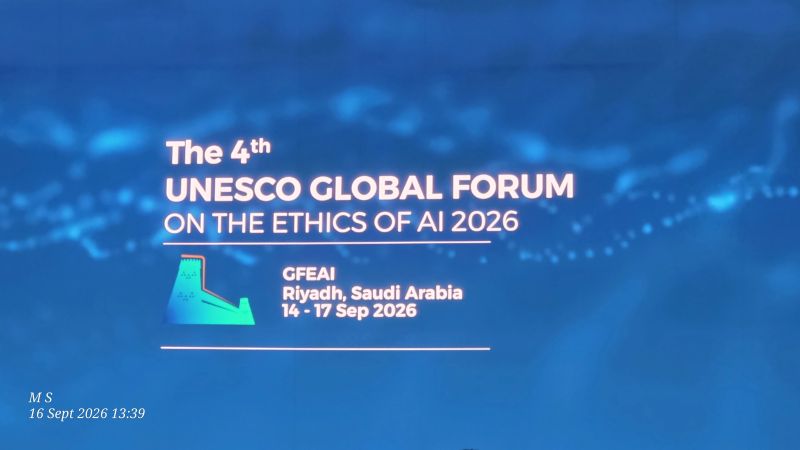
- I attended the fourth UNESCO Global Forum on the Ethics of AI in Riyadh. My LinkedIn reflection begins with an expectation: I thought it would be closer to a large technology exhibition, with products, companies, and new capabilities on display. The experience was different. The conversations centred on what people and institutions are going to do with those capabilities.
- In my post, I asked who is responsible when AI causes harm, how humans remain accountable when decisions involve machines, and how governments approach systems that operate across borders. I also noticed the discussion of environmental and energy demands.
- Some of the moments I valued most were conversations with people from different countries and backgrounds. I wrote that these exchanges made it clearer that there is no single universal perspective on AI: different settings bring different opportunities, risks, and priorities.
- As someone aspiring towards corporate law, I began looking at the forum through questions of responsibility, risk, data, and decision-making. This is a developing student perspective, rather than a claim of professional AI governance expertise.
What I expected, and what changed
I attended the fourth UNESCO Global Forum on the Ethics of AI in Riyadh.
My LinkedIn reflection begins with an expectation: I thought it would be closer to a large technology exhibition, with products, companies, and new capabilities on display. The experience was different. The conversations centred on what people and institutions are going to do with those capabilities.
I found myself listening to governments, researchers, international organisations, and people working on governance.
Read the deeper context
The shift mattered because it moved the subject from technical possibility to responsibility. A system doing something impressive is only the beginning of a much wider set of questions.
The questions that stayed
In my post, I asked who is responsible when AI causes harm, how humans remain accountable when decisions involve machines, and how governments approach systems that operate across borders.
I also noticed the discussion of environmental and energy demands.
The value of the event was not that it supplied one final answer.
Read the deeper context
It showed me how many perspectives are involved and how implementation becomes part of the discussion. I left with a more concrete interest in the relationship between innovation, institutions, and the rules around them.
Learning through conversations
Some of the moments I valued most were conversations with people from different countries and backgrounds.
I wrote that these exchanges made it clearer that there is no single universal perspective on AI: different settings bring different opportunities, risks, and priorities.
That was a useful reminder to listen before simplifying a subject.
Read the deeper context
A policy discussion or business decision can look different when the assumptions and conditions behind it change. I want to carry that attention into my own reading and writing.
Connection to my current direction
As someone aspiring towards corporate law, I began looking at the forum through questions of responsibility, risk, data, and decision-making.
This is a developing student perspective, rather than a claim of professional AI governance expertise.
The related journal essay develops the central question: what comes after a technology becomes capable of performing a task?
Read the deeper context
The original post remains linked so readers can see the experience that prompted the reflection.
This page expands the themes of my original LinkedIn post. Specific activities are limited to what the source records; broader paragraphs provide student learning context.